A festive atmosphere is no protection against a clinical emergency when sub-zero temperatures meet record-breaking crowds. You understand that managing thousands of visitors in tight, icy spaces is a high-stakes operation that carries significant liability. Relying on basic volunteers is a risk your event cannot afford. Securing the right Christmas market first aid staff is about more than ticking a box for your insurance provider. It's about deploying frontline-experienced professionals who can manage hypothermia, crowd-related trauma, and cardiac events in real time.
This guide provides the essential steps to securing professional, clinical-grade medical cover that ensures public safety and full regulatory compliance. You'll learn how to distinguish between basic first aiders and qualified clinical medics whilst meeting the rigorous requirements of The Purple Guide. We will outline how to build a robust staffing plan that satisfies local authorities and provides your visitors with the highest standard of pre-hospital care. By the end of this briefing, you'll have a clear roadmap for professional deployment that protects both your reputation and your guests.
Key Takeaways
- Understand the critical distinction between basic first aiders and clinical-grade medics to ensure your event is equipped for high-density crowd emergencies.
- Identify and mitigate winter-specific clinical risks, such as hypothermia and weather-related trauma, through specialised medical deployment.
- Learn how to use The Purple Guide risk assessment to calculate the precise volume of Christmas market first aid staff needed for regulatory approval.
- Secure your event's liability by implementing a rigorous vetting process for professional medical qualifications and HCPC or NMC registrations.
- Streamline local authority approval by partnering with Kent-based experts who provide NHS-standard clinical governance and frontline experience.
Table of Contents
- Defining the Scope of Christmas Market Medical Cover
- Identifying Winter-Specific Clinical Risks
- Calculating Staffing Requirements for Seasonal Markets
- Vetting and Hiring Qualified Medical Personnel
- Partnering with Tech Medical Services for Festive Safety
Defining the Scope of Christmas Market Medical Cover
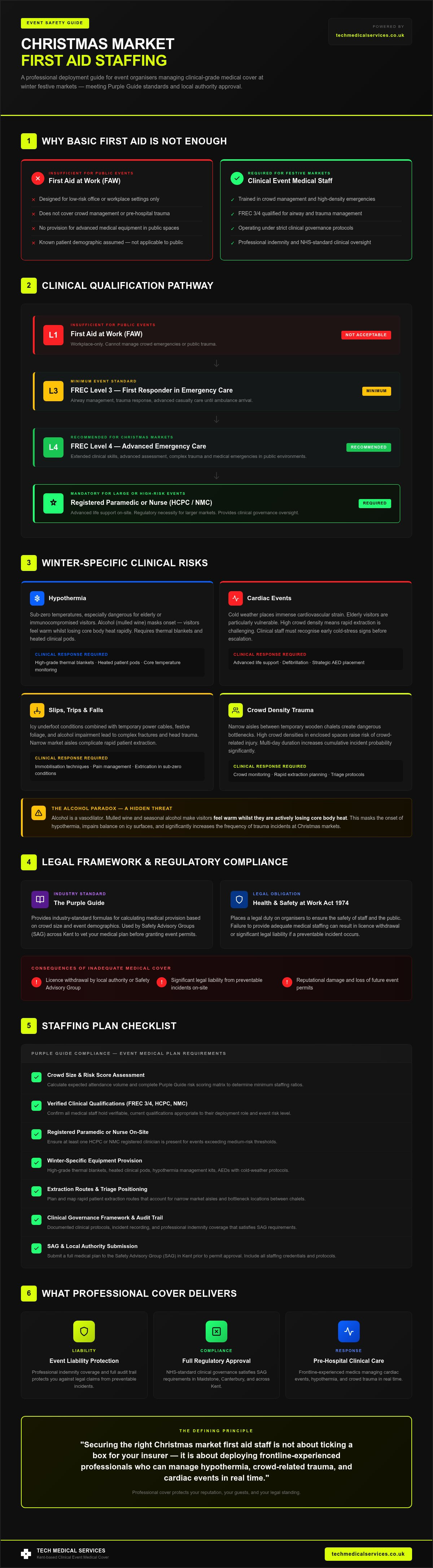
A Christmas market is a unique operational environment. Unlike a standard indoor event, these markets are characterised by high crowd densities, multi-day durations, and prolonged exposure to winter weather. These factors create a complex risk profile that basic first aid cannot address. Managing safety in these conditions requires more than a casual presence; it demands a structured medical deployment. Local authorities across Kent, particularly in busy centres like Maidstone and Canterbury, now require comprehensive medical plans before granting event permits. They expect to see evidence of clinical oversight that matches the specific scale and duration of the festive market.
Clinical Governance is the systematic framework through which organisations are accountable for continuously improving the quality of their services and safeguarding high standards of care. Without this framework, an event organiser lacks the professional infrastructure to manage serious incidents on-site. Professional medical cover ensures that your Christmas market first aid staff are not just present, but are operating under strict clinical protocols and professional indemnity.
First Aid at Work vs. Event Medical Staff
A common error is assuming a First Aid at Work (FAW) certificate is sufficient for a public event. It isn't. FAW is designed for low-risk office environments or controlled workplaces where the patient demographic is known. It does not cover crowd management, pre-hospital trauma, or the use of advanced medical equipment in a public space. For public safety, organisers must look toward the First Responder in Emergency Care (FREC) pathway. Staff qualified to FREC Level 3 or 4 possess the clinical skills to manage airway emergencies and trauma until an ambulance arrives. For larger markets with higher risk scores, the presence of a Registered Paramedic or Nurse is a regulatory necessity to provide advanced life support on-site.
The Legal Framework for Festive Markets
The Health and Safety at Work Act 1974 places a legal duty on organisers to ensure the safety of both staff and the public. In the event industry, this duty is interpreted through The Purple Guide and, in some instances, The Green Guide. These documents provide the industry-standard formulas for calculating medical provision based on crowd size and demographics. In Kent, Safety Advisory Groups (SAG) use these standards to vet your event. Failure to provide adequate Christmas market first aid staff can lead to the withdrawal of your licence or significant legal liability if a preventable incident occurs. Professional cover provides the audit trail and clinical expertise required to satisfy these legal benchmarks.
Identifying Winter-Specific Clinical Risks
Winter operations present a distinct set of clinical challenges that differ significantly from summer festivals. Cold weather is a primary catalyst for medical incidents, particularly amongst elderly or immunocompromised visitors. Low temperatures put immense strain on the cardiovascular system, increasing the likelihood of cardiac events. Your Christmas market first aid staff must be trained to recognise the subtle early signs of cold-stress before they escalate into life-threatening emergencies. This requires a level of clinical observation that goes beyond basic first aid training.
The physical layout of festive markets adds another layer of complexity. Narrow aisles between temporary wooden chalets create bottlenecks, making rapid extraction difficult during a crisis. Temporary power cables, decorative lighting, and festive foliage are constant trip hazards, especially when combined with icy underfoot conditions. These risks are compounded by the consumption of mulled wine and seasonal alcohol. Alcohol is a vasodilator; it makes visitors feel warm whilst they are actually losing core body heat. This masks the onset of hypothermia and impairs balance on uneven surfaces, leading to a higher frequency of trauma incidents. Securing experienced market first aid cover ensures these winter-specific variables are managed with clinical precision.
Environmental Emergencies: Hypothermia and Slips
Managing hypothermia in an outdoor setting requires specific equipment and rapid intervention. Standard first aid kits are insufficient for core temperature regulation. Effective deployment includes the use of high-grade thermal blankets and, where possible, heated clinical pods for patient stabilisation. Slips and falls on frozen ground often result in complex fractures or head trauma. Clinical staff must be proficient in immobilisation techniques and pain management in sub-zero environments where patient shock is accelerated by the cold. Rapid response is critical; a patient lying on frozen ground loses body heat at an alarming rate through conduction.
Festive Food Risks: Anaphylaxis and Burns
Festive markets are high-risk zones for severe allergic reactions. The prevalence of nuts, dairy, and seasonal spices in open-air food stalls increases the risk of accidental cross-contamination. Christmas market first aid staff must be equipped with adrenaline auto-injectors and trained in the latest Resuscitation Council UK protocols for anaphylaxis management. Proximity to high-temperature cooking equipment and boiling beverages also leads to frequent thermal injuries. Treating a burn in a cold environment requires a balance of cooling the injury whilst maintaining the patient's overall body temperature. Professional teams use specialised burn dressings and sterile irrigation to manage these injuries on-site, preventing further tissue damage and reducing the burden on local NHS A&E departments.
Calculating Staffing Requirements for Seasonal Markets
Determining the volume of Christmas market first aid staff is a rigorous, data-driven process. It relies on a formal risk assessment rather than historical guesswork. Organisers must evaluate peak attendance, the geographical footprint of the stalls, and the specific demographic of the visitors. A market attracting families and the elderly requires a higher clinical ratio than a low-density event. Static medical centres provide a controlled environment for treatment, whilst mobile foot patrols ensure rapid response in crowded thoroughfares. Weekend surges require a flexible staffing model that scales with visitor numbers to maintain safety standards during peak trading hours.
The location of your market also dictates your resource requirements. A rural market in the Kent countryside may require more self-sufficient medical units due to longer ambulance response times from the local trust. Conversely, a town centre market in Maidstone or Canterbury must account for the impact of its crowds on existing public infrastructure. Your medical plan must demonstrate that your event will not become a burden on the regional NHS network. This is achieved through a calculated mix of on-site treatment capabilities and professional triage.
The Purple Guide Risk Scoring System
The Purple Guide provides a structured scoring matrix to categorise event risk. You must assign numerical values to factors such as crowd density, event duration, and the nature of the site. High-risk features like ice rinks or fairground rides significantly inflate your risk score. In Kent, local authorities often demand a higher staffing baseline for town centre events to prevent overwhelming local emergency departments. Your deployment plan must reflect these scores to secure Safety Advisory Group (SAG) approval. It's a mandatory requirement for professional liability and operational transparency.
Resource Mix: Medics, Ambulances, and First Aiders
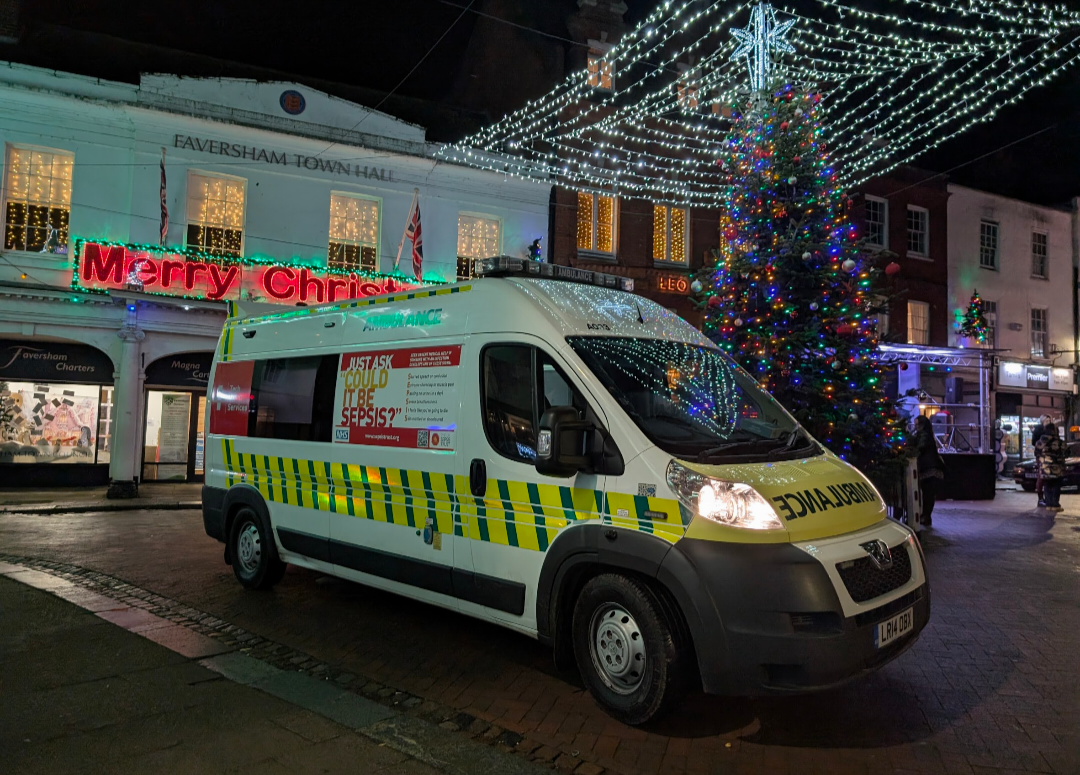
A balanced resource mix is essential for operational integrity. You cannot rely solely on basic first aiders for a high-risk festive event. A professional deployment includes a combination of First Responders for initial contact and Registered Paramedics for advanced clinical intervention. If your risk assessment identifies a high probability of trauma or cardiac events, a dedicated ambulance or mobile treatment unit is a logistical necessity. This unit serves as a stabilising hub, reducing the need for off-site transfers. Integrating these clinical teams with your security and stewarding hierarchy ensures a seamless response to any incident. It creates a unified command structure that saves critical seconds during a medical crisis.
Vetting and Hiring Qualified Medical Personnel
Vetting your Christmas market first aid staff is a mission-critical operation that goes beyond a simple review of CVs. It is a rigorous process of verification designed to safeguard your event's legal standing and visitor safety. Organisers must ensure that every individual deployed on-site possesses the specific clinical competencies required for pre-hospital care. This involves a step-by-step validation of professional credentials and a thorough review of the provider's operational history. Relying on unverified claims is a risk that compromises your clinical governance and increases your liability in the event of a serious incident.
For any high-risk deployment, professional registration is non-negotiable. You must verify Registered Paramedics through the Health and Care Professions Council (HCPC) and Nurses through the Nursing and Midwifery Council (NMC). These registers provide a transparent record of an individual's right to practice. Because festive markets are family-oriented environments, Enhanced DBS checks are a mandatory requirement for all personnel. Furthermore, you must evaluate the provider's insurance portfolio. Professional medical cover requires both Public Liability and specific Medical Malpractice insurance. Standard liability only covers general accidents; malpractice insurance is essential to cover clinical decisions and treatment outcomes. To ensure your event meets these uncompromising standards, you should hire professional event medical cover from a provider with a proven clinical pedigree.
Key Qualifications to Look For
Understand the distinction between a basic first aider and a pre-hospital clinician. First aid is a skill, but pre-hospital care is a professional discipline. Look for staff trained within the First Responder in Emergency Care (FREC) pathway. A Level 3 or Level 4 FREC qualification indicates a clinician trained to manage trauma and medical emergencies in the field. The most effective staff often possess frontline NHS experience. This background ensures they remain calm under the high-pressure conditions of a crowded market. They bring a level of clinical intuition that only comes from real-world emergency response.
Questions to Ask Your Medical Provider
Before signing a contract, you must interrogate the provider’s clinical infrastructure. Ask if they have a dedicated Clinical Lead overseeing the deployment to ensure professional accountability. Inquire about the specific contents of their standard market kit; it should include advanced airway management tools and automated external defibrillators (AEDs) as a baseline. Finally, demand a post-event medical report. This document provides a vital audit trail of every patient interaction, which is essential for your insurance records and future planning. A professional provider will deliver this data as a standard part of their service.
Partnering with Tech Medical Services for Festive Safety
Tech Medical Services provides frontline-experienced medical deployment for high-pressure festive environments. Our team delivers NHS-standard care across the region. We specialise in Christmas event first aid and market medical cover. Because we also deliver certified Level 3 pre-hospital care training, our clinicians maintain a superior level of technical readiness. Whilst every festive market layout presents unique risks, we develop bespoke medical plans that address the specific density and logistical challenges of your site. This ensures every stall and walkway is within the immediate response radius of our team. We provide a quietly capable expert presence. Our staff are veteran clinicians who understand the nuances of pre-hospital trauma amongst winter conditions. We don't rely on marketing fluff; we lead with competence.
Local Expertise Across Kent and the South East
We maintain a strong operational footprint across Kent and the South East. Our deployment capabilities extend from Staplehurst to Dartford, including major hubs like Maidstone, Canterbury, and Tunbridge Wells. We understand the regional clinical landscape. Our teams are intimately familiar with local hospital handover procedures and South East Coast Ambulance Service (SECAMB) protocols. This regional expertise is vital for community events in Aylesford and Cranbrook. It allows for a seamless transition of care if a patient requires emergency hospital transfer. We don't just provide staff; we provide a local clinical infrastructure that integrates with public services. This familiarity with Kent's infrastructure reduces response times and improves patient outcomes.
The Tech Medical Standard of Care
Operational integrity is our primary benchmark. Our commitment to clinical governance ensures that your Christmas market first aid staff operate under the highest professional standards. We reject the casual approach of basic first aid volunteers. Our frontline-experienced medics remain calm under intense festive pressure. They manage everything from minor thermal injuries to critical cardiac events with clinical precision. We lead through action and professional discipline. This no-nonsense approach provides the security you need for local authority approval and comprehensive public safety. Our heritage in high-risk environments, including motorsport and festivals, means we're prepared for the most complex scenarios. We provide a partnership built on absolute reliability. Contact us today for a bespoke medical risk assessment for your Christmas market.
Securing Your Festive Deployment
A successful Christmas market relies on the invisible strength of its medical infrastructure. You have seen that festive safety is a complex operation requiring winter-specialist expertise and rigorous clinical governance. Moving beyond basic first aid ensures your event is prepared for the specific trauma and environmental risks of the season. By calculating your requirements through The Purple Guide and verifying every clinician's professional registration, you protect both your visitors and your legal liability. Deploying the right Christmas market first aid staff is the final step in transitioning from a standard event to a professionally secured operation.
Tech Medical Services provides the disciplined, frontline experience necessary for high-density festive markets across Kent. Our staff are qualified to NHS pre-hospital care standards and backed by comprehensive medical malpractice insurance. We lead through competence and professional duty, ensuring your event receives the highest standard of pre-hospital response. Secure Professional Medical Cover for Your Christmas Market today to guarantee a safe and compliant festive season for all your guests. We look forward to supporting your operational success.